Helping You Grow with Tech & Marketing


💡 In a hurry? Jump straight to the 10-step checklist or explore the funding options guide.
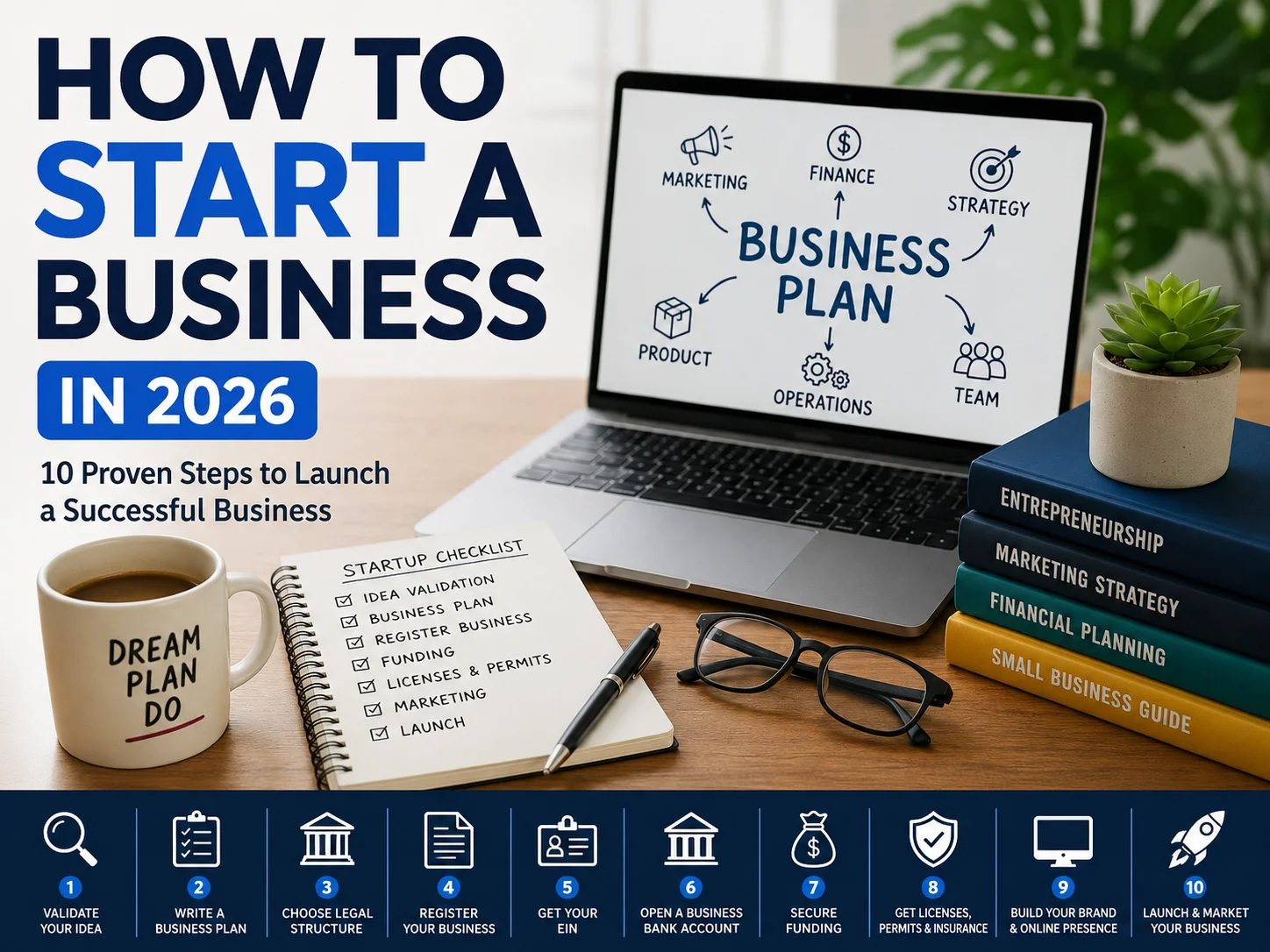
Quick Answer: If you are wondering how to start a business in 2026 start by checking if your idea’s good. Then write a plan for how to start a business. Choose the way to set up your business legally. Register your business with the authorities. Get an EIN which’s like a tax ID for your business. Open a bank account for your business. Find money to support your business. Make sure you have all the licenses you need. Build your brand so people know who you are. Launch your business with a marketing plan that focuses on your goals. Learning how to start a business successfully needs planning lots of research and steady work. For service-based businesses or online businesses these steps can be done in 30 days and cost less, than $500.
Quick Summary: Starting a business has never been more accessible than it is today. Affordable digital tools, AI-powered software, and free guidance from trusted organizations have significantly lowered the barriers to entrepreneurship. By combining recommendations from the U.S. Small How to Start a Business Administration (SBA), SCORE, Forbes Advisor, and NerdWallet, this guide walks you through every stage of launching a successful business—from validating your idea to attracting your first customers. Whether you’re building a side hustle or planning a full-time company, you’ll find practical, step-by-step advice you can apply immediately.
Key Takeaways on How to Start a Business in 2026
- Small businesses generate 43.5% of U.S. GDP and employ nearly half of the private workforce.
- Entrepreneurs who create a written business plan are significantly more likely to grow their businesses than those who don’t.
- Many service-based and online businesses can be launched for under $1,000, making entrepreneurship more accessible than ever.
- Validating your idea before investing money is one of the most important factors in reducing risk.
- Building a strong online presence from day one helps businesses attract customers faster.
- Following a structured launch plan minimizes costly mistakes and improves long-term success.
People Also Ask About How to Start a Business
How do I start a business with no money?
Many businesses can be launched with little or no upfront investment. Service-based ventures such as freelancing, consulting, tutoring, virtual assistance, pet sitting, and cleaning rely more on your skills than your budget. If you’re interested in online business models, digital products and dropshipping can often be started for less than $500. Focus on solving a real problem and using resources you already have.
What is the first step to starting a business?
The first step is validating your idea. Before spending money on branding, registration, or inventory, confirm that people actually need your product or service. Conduct market research, study competitors, and speak directly with potential customers to ensure there’s genuine demand.
How long does it take to start a business?
The timeline depends on yourHow to Start a business model and location. In many cases, registering a business can take anywhere from one to seven business days. Service-based businesses often reach their first customers within a few weeks, while product-based businesses may require one to three months due to inventory, manufacturing, or shipping requirements.
Do I need a business license to start a business?
Most How to Start a businesses require at least one license or permit, although the exact requirements vary by state, city, and industry. Before launching, check your local regulations to ensure your business complies with all licensing and registration requirements. Completing these legal steps early helps you avoid fines and operational delays later.
2. Step 1 — How to Start a Business by Validating Your Idea

Before investing time or money into registration, branding, or inventory, make sure people genuinely want what you plan to offer. Many new How to Start a businesses fail because founders build first and validate later. Taking time to confirm demand can save you thousands of dollars and months of wasted effort.
You don’t need expensive research or professional consultants to validate an idea. Start by answering three essential questions:
Does your business solve a real problem?
Successful businesses exist because they solve problems people are willing to pay to fix. Instead of asking whether your idea is exciting, ask whether it improves someone’s life, saves time, reduces costs, or eliminates frustration. A clear value proposition gives your How to Start a business a much stronger foundation.
Is there evidence of market demand?
Look for proof that customers are already spending money in your niche. Free tools like Google Trends, keyword research platforms, industry reports, and competitor analysis can help you understand market demand. Existing competitors are often a positive sign—they prove that customers already buy similar products or services.
Will customers pay today?
Nothing validates an idea better than an actual sale. A pre-order, paid consultation, deposit, or signed agreement provides stronger evidence than surveys or social media likes. Whenever possible, test your offer with real customers before making significant investments.
Pro Tip: Speak directly with at least 10–20 potential customers before launching. Their feedback will help you refine your offer, pricing, and messaging while uncovering problems you may not have considered.
3. Step 2 — How to Start a Business with a Strong Business Plan

How to Start A business plan isn’t just a document for banks or investors—it’s your roadmap for building a successful company. It helps you organize your ideas, estimate costs, identify opportunities, and prepare for potential challenges before they become expensive mistakes.
Research consistently shows that entrepreneurs who create written How to Start a business plans are more likely to achieve sustainable growth because planning encourages better decision-making and clearer financial expectations.
An effective business plan should include:
- Executive Summary – A concise overview of your How to Start a business and long-term vision.
- Market Analysis – Your target audience, competitors, and market opportunity.
- Business Model – How your company will generate revenue and create value.
- Marketing Strategy – How you’ll attract, convert, and retain customers.
- Financial Plan – Startup costs, revenue projections, expenses, and break-even estimates.
Remember that your How to Start a business plan should evolve as your company grows. Review and update it regularly instead of treating it as a one-time document.
Expert Tip: Keep your first version simple. A clear five-to-seven-page How to Start a business plan is often far more useful than an overly detailed document you’ll never revisit.
4. Step 3 — How to Start a Business: Choose the Right Legal Structure

Selecting the right legal structure affects your taxes, personal liability, ownership rights, and future growth opportunities. Although you can change your structure later, making the right choice from the beginning saves time, money, and administrative work.
The most common How to Start a business structures include:
Sole Proprietorship
The easiest and least expensive option for solo entrepreneurs. There’s minimal paperwork, but you are personally responsible for all business debts and legal obligations.
Best for: Freelancers, consultants, and individuals testing a new idea.
Partnership
Designed for How to Start a businesses with two or more owners. Partners share responsibilities, profits, and liabilities according to their agreement.
Best for: Businesses founded by two or more individuals who want to operate together.
Limited Liability Company (LLC)
An LLC combines liability protection with flexible taxation, making it one of the most popular choices for small businesses. It separates your personal assets from your How to Start a business liabilities while remaining relatively simple to manage.
Best for: Most small businesses and first-time entrepreneurs.
S Corporation
An S Corporation provides liability protection while allowing profits and losses to pass through to shareholders for tax purposes. It can offer tax advantages once a business becomes consistently profitable.
Best for: Established businesses with steady revenue.
C Corporation
A C Corporation is generally the preferred structure for companies planning to raise venture capital or eventually go public. Although it involves more regulations and administrative requirements, it offers greater flexibility for large-scale growth.
Best for: High-growth startups seeking outside investment.
Which Structure Should You Choose?
For many first-time entrepreneurs, an LLC offers the best balance of liability protection, tax flexibility, and ease of management. However, every business is different. If your ownership structure, funding plans, or tax situation is more complex, consulting an attorney or accountant before registering your How to Start a business is a smart investment that can prevent costly mistakes later.
5. Step 4 — Register Your Business
Once you’ve chosen a legal structure, it’s time to make your How to Start a business official. Registration requirements vary by state and business type, but the overall process is straightforward when completed in the correct order.
Choose Your Business Name
Your How to Start a business name should be unique, memorable, and easy to spell. Before committing to a name:
- Search your state’s business registry to confirm it’s available.
- Check whether the matching domain name is available.
- Verify that social media handles are available for brand consistency.
- Avoid names that are too similar to existing businesses or registered trademarks.
If you plan to operate under a name different from your legal name, you may also need to file a DBA (Doing Business As) registration, depending on your state’s requirements.
Register Your Business Entity
If you’re forming an LLC or corporation, file the required formation documents with your state’s Secretary of State. In most states, the process can be completed online within a few How to Start a business days.
Be prepared to provide:
- Your business name
- Business address
- Registered agent information
- Ownership details
- Filing fee
Register for State Taxes
Depending on where your How to Start a business operates, you may need to register for:
- Sales tax
- Employer taxes
- State income tax
- Industry-specific taxes
Review your state’s Department of Revenue website to determine which registrations apply to your How to Start a business.
Pro Tip: Register everything correctly the first time. Correcting filing mistakes later often costs more time and money than getting it right from the beginning.
6. Step 5 — Get Your EIN and Complete Tax Registration
An Employer Identification Number (EIN) is your How to Start a business’s federal tax identification number, issued by the IRS. Think of it as the Social Security number for your company.
You’ll typically need an EIN to:
- Open a business bank account
- Hire employees
- File federal and state taxes
- Apply for business loans
- Build business credit
The good news is that obtaining an EIN is completely free and usually takes only a few minutes through the IRS website.
Even if you’re operating as a single-member LLC with no employees, getting an EIN early offers several advantages. It helps separate your personal and How to Start a business finances, simplifies future tax filings, and prepares your business for growth.
Expert Tip: Complete your EIN application immediately after registering your How to Start a business. It’s a small task that unlocks many of the next steps in your entrepreneurial journey.
7. Step 6 — Open a Business Bank Account
One of the smartest financial decisions you can make is opening a dedicated business bank account before accepting your first payment.
Many first-time entrepreneurs continue using personal accounts, but doing so can create accounting problems, complicate tax preparation, and even weaken the liability protection provided by an LLC.
A separate How to Start a business account helps you:
- Keep personal and business finances separate.
- Maintain accurate financial records.
- Simplify bookkeeping and tax reporting.
- Build credibility with customers and suppliers.
- Establish business credit for future financing.
Most banks require:
- Your EIN
- Business formation documents
- Government-issued identification
- Business address and contact information
Many financial institutions now offer low-cost or no-fee business checking accounts designed specifically for startups and small businesses.
Why This Step Matters
Strong financial organization from day one makes every future How to Start a business decision easier. Whether you’re applying for financing, preparing taxes, or tracking profitability, clean financial records save time and reduce stress.
Pro Tip: Use accounting software from the beginning—even if your How to Start a business only has a few transactions each month. Building good bookkeeping habits early prevents costly mistakes as your business grows.
8. Step 7 — Secure Funding for Your Business
One of the biggest questions new entrepreneurs ask is: How much money do I need to start a business? The answer depends entirely on your How to Start a business model, industry, and growth goals. Fortunately, there are more funding opportunities available today than ever before.
Bootstrap Your Business
Many successful How to Start a businesses begin with personal savings. Bootstrapping allows you to maintain complete ownership while avoiding debt or investor pressure. If your startup costs are relatively low, this is often the safest way to get started.
SBA Loans
If you need additional capital, the U.S. Small Business Administration (SBA) partners with approved lenders to provide financing for eligible How to Start a businesses. SBA loans often offer competitive interest rates and flexible repayment terms compared to traditional business loans.
Small Business Grants
Unlike loans, grants don’t have to be repaid. Government agencies, nonprofit organizations, and private companies regularly offer grants for entrepreneurs based on factors such as industry, location, gender, or veteran status. While grants can be competitive, they’re worth exploring if your How to Start a business qualifies.
Angel Investors and Venture Capital
Businesses with high-growth potential may attract funding from angel investors or venture capital firms. In exchange for capital, investors typically receive an ownership stake in the company. This option is best suited for scalable startups rather than traditional local businesses.
Crowdfunding
Platforms like Kickstarter and Indiegogo allow entrepreneurs to raise funds directly from future customers. Besides generating capital, crowdfunding also helps validate demand before launching a product.
Estimate Your Startup Costs
Before seeking funding, calculate your expected expenses, including:
- Business registration fees
- Equipment and supplies
- Inventory
- Website and software
- Marketing and advertising
- Insurance
- Emergency cash reserve
Expert Tip: Raise only the amount of capital you truly need. Many How to Start a businesses fail not because they lack funding, but because they spend too much before generating consistent revenue.
9. Step 8 — Obtain Licenses, Permits, and Business Insurance
Before opening your doors or serving customers, make sure your How to Start a business complies with all legal requirements. Operating without the proper licenses or insurance can lead to fines, lawsuits, or unexpected interruptions.
Depending on your location and industry, you may need:
- General business licenses
- Sales tax permits
- Professional or occupational licenses
- Health permits
- Home occupation permits
- Industry-specific certifications
Requirements differ significantly from one state and municipality to another, so always verify local regulations before launching.
Protect Your Business with Insurance
Insurance protects your company from unexpected financial losses.
Common policies include:
- General liability insurance
- Professional liability (Errors & Omissions)
- Commercial property insurance
- Workers’ compensation insurance
- Cyber liability insurance
- Commercial auto insurance
The right coverage depends on your industry, How to Start a business size, and level of risk.
Pro Tip: Insurance may seem like an extra expense, but one unexpected lawsuit or accident can cost far more than years of insurance premiums.
10. Step 9 — Build Your Brand and Online Presence
Your brand is more than a logo—it’s how customers recognize, remember, and trust your How to Start a business.
In today’s digital world, many customers will visit your website or social media pages before ever contacting you. A strong online presence builds credibility and increases your chances of attracting new customers.
Create a Professional Brand
Focus on developing:
- A memorable business name
- A professional logo
- Consistent brand colors
- Clear messaging
- A unique value proposition
Consistency across every platform helps customers recognize and trust your How to Start a business.
Build a Website
Your website doesn’t need to be expensive. A simple, well-designed website should clearly explain:
- What you offer
- Who you help
- Why customers should choose you
- How visitors can contact you
- A clear call-to-action
Optimize Your Local Presence
If you serve local customers, claim and verify your Google How to Start a Business Profile. Encourage satisfied customers to leave reviews, as positive ratings can significantly improve your local search visibility.
Focus on the Right Social Media Platforms
You don’t need to be active everywhere.
Instead, identify where your ideal customers spend their time and consistently publish helpful, valuable content.
Expert Tip: It’s better to consistently manage two social platforms than to neglect five.
11. Step 10 — Launch and Grow Your Business
Launching your How to Start a business isn’t the finish line—it’s the beginning of a long-term growth journey.
Many How to Start a businesses succeed because they consistently improve after launch rather than trying to be perfect before opening.
Find Your First Customers
Start with people who already know and trust you:
- Friends
- Family
- Former colleagues
- Existing professional contacts
- Local business communities
Personal referrals often generate the fastest early sales.
Focus on One Marketing Strategy
Avoid trying every marketing tactic at once.
Instead, master one primary customer acquisition channel before expanding. Depending on your How to Start a business, this might include:
- Content marketing
- Local SEO
- Social media marketing
- Email marketing
- Paid advertising
- Referral marketing
Consistency always beats complexity.
Build Long-Term Customer Relationships
Acquiring customers is only the first step.
Encourage repeat How to Start a business by:
- Providing excellent customer service
- Requesting reviews
- Following up after every purchase
- Creating loyalty programs
- Building an email list
Happy customers become your best marketers.
Measure Your Progress
Track important performance indicators such as:
- Revenue
- Profit margin
- Customer acquisition cost
- Conversion rate
- Website traffic
- Customer retention rate
Review these metrics monthly so you can make informed business decisions instead of relying on guesswork.
Final Tip: Don’t wait for perfection before launching. Start with a quality product or service, gather real customer feedback, and improve continuously. Businesses that adapt quickly often outperform those that spend too long preparing without taking action.
12. The Complete Business Startup Checklist
Use this checklist to track your progress from idea to launch. Completing each step will help you build a stronger foundation and reduce the risk of costly mistakes later.
Validation & Planning
- ☐ Identify a problem your business will solve.
- ☐ Conduct market research and analyze your competitors.
- ☐ Interview at least 10–20 potential customers.
- ☐ Confirm there is real demand for your product or service.
- ☐ Write a practical business plan.
- ☐ Estimate startup costs and monthly operating expenses.
- ☐ Choose your pricing strategy and revenue model.
Legal & Administrative Tasks
- ☐ Choose the right legal structure.
- ☐ Register your business name.
- ☐ File the required state registration documents.
- ☐ Apply for an EIN from the IRS.
- ☐ Register for state and local taxes if required.
- ☐ Obtain all necessary licenses and permits.
- ☐ Purchase the appropriate business insurance.
Financial Setup
- ☐ Open a dedicated business bank account.
- ☐ Choose accounting software.
- ☐ Create a bookkeeping system.
- ☐ Separate personal and business finances.
- ☐ Prepare a simple monthly budget.
Branding & Marketing
- ☐ Purchase your domain name.
- ☐ Build a professional website.
- ☐ Create your logo and brand identity.
- ☐ Set up your Google Business Profile (if applicable).
- ☐ Create social media accounts on platforms your customers use.
- ☐ Build an email list.
- ☐ Prepare your launch marketing plan.
Launch
- ☐ Launch your website.
- ☐ Announce your business.
- ☐ Reach out to your first potential customers.
- ☐ Collect customer reviews.
- ☐ Track results and improve based on feedback.
Pro Tip: Don’t worry about completing everything perfectly before launching. Focus on building a solid foundation, then improve your business as you gain real customer experience.
13. Common Mistakes First-Time Entrepreneurs Make
Starting a business is exciting, but many entrepreneurs make avoidable mistakes that slow their progress or lead to unnecessary expenses. Learning from these common pitfalls can save both time and money.
1. Skipping Market Validation
Many founders fall in love with their idea before confirming that customers actually want it.
Always validate demand before investing heavily in branding, inventory, or equipment. Even a few conversations with potential customers can reveal valuable insights.
2. Spending Too Much Too Soon
New entrepreneurs often purchase expensive software, office furniture, premium branding packages, or unnecessary equipment before generating revenue.
Keep your expenses lean during the early stages and invest only in tools that directly support business growth.
3. Mixing Personal and Business Finances
Using the same bank account for personal and business expenses creates accounting headaches and may weaken liability protection.
Open a dedicated business bank account from the beginning and keep all business transactions separate.
4. Ignoring Financial Planning
Many businesses fail because owners don’t understand their cash flow.
Track every expense, monitor revenue carefully, and maintain an emergency reserve whenever possible.
5. Trying to Do Everything Alone
Successful entrepreneurs know when to seek help.
Take advantage of free mentoring programs, online communities, professional advisors, and experienced business owners who can help you avoid common mistakes.
6. Waiting Too Long to Launch
Perfectionism delays progress.
Instead of trying to build the perfect business, launch a high-quality minimum version, gather customer feedback, and improve continuously.
7. Neglecting Marketing
Even the best products won’t sell if nobody knows they exist.
Marketing isn’t something you begin after launching—it’s something you should prepare before your first day in business.
14. Free Resources to Help You Start a Business
You don’t have to build your business alone. Many trusted organizations provide free education, tools, mentoring, and planning resources for new entrepreneurs.
U.S. Small Business Administration (SBA)
The SBA remains the most comprehensive resource for entrepreneurs in the United States. It offers:
- Business startup guides
- Free planning templates
- Funding information
- Online learning courses
- Local business support programs
If you’re starting your first business, the SBA should be one of your first stops.
SCORE
SCORE connects entrepreneurs with experienced volunteer mentors who provide free, confidential business advice.
Whether you need help with planning, marketing, finance, or operations, SCORE mentors can provide practical guidance based on real business experience.
Small Business Development Centers (SBDCs)
SBDCs offer free consulting, workshops, and business training across the United States.
Their advisors can help with:
- Business planning
- Financial projections
- Marketing strategies
- Export assistance
- Growth planning
U.S. Chamber of Commerce
The Chamber provides practical articles, legal guidance, and business resources covering entrepreneurship, hiring, operations, leadership, and growth.
Entrepreneur & Forbes Advisor
Both websites regularly publish high-quality content covering:
- Startup strategies
- Business financing
- Leadership
- Marketing
- Productivity
- Small business trends
Reading trusted business publications regularly helps you stay informed as your company grows.
Investopedia
Investopedia explains business and financial concepts in simple language, making it an excellent learning resource for first-time entrepreneurs who want to improve their financial knowledge.
Expert Tip: Successful entrepreneurs never stop learning. Spend at least 30 minutes each week reading trusted business resources to continuously improve your knowledge and decision-making.
15. What Successful Entrepreneurs on Reddit Recommend
While official organizations provide excellent guidance, experienced entrepreneurs often share practical lessons that come only from building real businesses. Communities like r/Entrepreneur, r/SmallBusiness, and r/Startups regularly discuss both successes and failures, offering valuable real-world insights.
Validate Before You Build
One of the strongest themes across Reddit is simple: don’t spend months building something nobody wants.
Many founders admit they invested significant time and money into products before speaking with potential customers. The most successful entrepreneurs recommend validating your idea early through conversations, pre-orders, or pilot customers.
Lesson: Customer feedback is far more valuable than assumptions.
Start Small and Improve Quickly
Another common recommendation is to avoid launching with a perfect product.
Instead, release a simple version that solves one important problem well. Early customer feedback will guide future improvements much better than trying to predict every feature in advance.
Remember:
“Done is better than perfect.”
Focus on Sales, Not Just the Product
Many first-time entrepreneurs spend months improving their product while doing very little marketing.
Experienced founders repeatedly point out that customers don’t buy products they never discover.
Successful businesses dedicate time every week to:
- Marketing
- Networking
- Sales
- Customer relationships
- Building trust
Growth comes from consistently finding new customers—not just improving your product.
Manage Cash Carefully
Cash flow is one of the most discussed topics among business owners.
Profitable businesses can still fail if they run out of cash.
Experienced entrepreneurs recommend:
- Keeping operating costs low.
- Avoiding unnecessary debt.
- Building an emergency reserve.
- Reinvesting profits wisely.
- Tracking expenses every month.
Financial discipline often matters more than rapid growth.
Keep Learning
Business owners who continue learning generally make better long-term decisions.
Whether it’s reading books, attending workshops, listening to podcasts, or working with mentors, continuous learning gives entrepreneurs a significant competitive advantage.
Key Takeaway: Successful founders rarely stop improving themselves.
16. Frequently Asked Questions
1. Can I start a business with no money?
Yes. Many service-based businesses require very little startup capital because they rely primarily on your existing skills. Freelancing, consulting, tutoring, virtual assistance, cleaning, and digital services are common examples. As revenue grows, you can gradually reinvest profits into expanding your business.
2. What is the best legal structure for a new business?
For many first-time entrepreneurs, an LLC offers an excellent balance of liability protection, flexibility, and ease of management. However, the right structure depends on your business goals, ownership, taxes, and future plans.
3. How long does it take to start a business?
Many businesses can be legally registered within a few days. Reaching your first paying customer may take anywhere from several weeks to several months, depending on your industry, marketing efforts, and business model.
4. Do I really need a business plan?
Absolutely.
Your business plan doesn’t need to be lengthy, but it should clearly define:
- Your target market
- Your products or services
- Pricing strategy
- Marketing plan
- Financial projections
- Business goals
A written plan helps you make smarter decisions as your business grows.
5. How much money do I need?
Startup costs vary considerably.
Many online or service businesses can launch for under $1,000, while retail, manufacturing, or restaurant businesses often require significantly larger investments.
Calculate your expected expenses before seeking funding.
6. Should I quit my job before starting a business?
Not necessarily.
Many successful entrepreneurs build their businesses while keeping full-time employment. Waiting until your business generates reliable income can reduce financial pressure during the early stages.
7. What licenses do I need?
Requirements depend on your location and industry.
Research your local, state, and federal regulations before launching to ensure your business operates legally from day one.
8. Do I need a website?
In most cases, yes.
A professional website builds credibility, improves visibility in search engines, and gives potential customers an easy way to learn about your business and contact you.
9. What’s the biggest mistake new entrepreneurs make?
The most common mistake is launching without validating demand.
Building something people don’t actually want wastes valuable time and money. Always confirm customer interest before making major investments.
10. What’s the secret to long-term business success?
There isn’t one secret.
Long-term success usually comes from consistently solving customer problems, managing finances responsibly, adapting to market changes, and continually improving your products, services, and skills.
Final Thoughts
Starting a business isn’t about having a perfect idea—it’s about taking consistent action.
Every successful company began with someone willing to solve a problem, learn new skills, and keep moving forward despite uncertainty.
The process may seem overwhelming at first, but breaking it into manageable steps makes it far more achievable.
Remember these core principles:
- Validate your idea before investing heavily.
- Build a simple but realistic business plan.
- Choose the right legal structure.
- Keep your finances organized.
- Market your business consistently.
- Continue learning and improving.
Most importantly, don’t wait for the “perfect” time.
The entrepreneurs who succeed aren’t necessarily the smartest or the luckiest—they’re the ones who start, learn from feedback, and improve over time.
Every successful business you admire today once existed only as an idea.
Yours can too.
Conclusion
Learning how to start a business in 2026 doesn’t have to be complicated.
By following the step-by-step framework in this guide—validating your idea, planning carefully, registering your business, securing funding, building your brand, and marketing consistently—you’ll dramatically increase your chances of long-term success.
Entrepreneurship is a journey of continuous learning rather than a single event. Every challenge teaches valuable lessons, every customer provides feedback, and every improvement moves your business closer to sustainable growth.
The most important step is the first one.
Start today, stay consistent, and keep improving. Your future business begins with the decisions you make now.